Pennsylvania breaker boys, 1911.
![]()
Give me the time (For an aesthetic of desistance)
Federica Bueti
In Neoliberal Western Democracies, participation has transformed into the daydream of politicians and the nightmare of precarious cultural workers. The latter is consistently prompted to invent and collaborate with others to survive the current economic system, the lack of resources, and the acceleration of time. In this context, participation is ripe for experiments with alternative strategies for collective action that can concurrently reiterate forms of neoliberal democratic consensus. Participatory practices have the potential to oppose the logic of a neoliberal society while donating novel forms of regeneration and development to society.
For a long time now, modes of participation have been shaped on the terms of the rhizomatic, anti- hierarchical, anti-dialectical, anti-representative, libertarian, non-anarchistic, and ideologically open since the 1960′s and 70′s. They were loosely organized by small groups of people in order to avoid structures and to work more effectively as an open network. The desire to permeate a totally open reality had manifested in artistic production that refuted the limitations of both traditional media and the institutional setting. For instance, Umberto Eco’s essay “Opera Aperta“1 -Open Work- (1962) presented a rubric for the structural analysis of the artwork that challenges its single trajectory and favors the concord and “openness” of contemporary art.
The new paradigm of contemporary art has been extensively explained by art historian Miwon Kwon’s assessment of site-specific practices. Kwon found the best reasons for experimenting with new formats to be “the epistemological challenge to relocate meaning from within the art object to the contingencies of its context; the radical restructuring of the subject from an old Cartesian model to a phenomenological one of lived bodily experience; and the self conscious desire to resist the forces of the capitalist market economy.”2
These new expectations demanded opposition and critical dissociation from a system based on rigid structures and roles. Artists came to terms with social inequality and distance from more agreeable living conditions. Artistic production was influenced by this detachment from both the motherland and the art system. Dematerialization, institutional critique, and aggressive anti-visuality registered as procedural responses to the multifaceted disassociation.
Assorted discourses penetrated art transversally. Analytical practices often used language and direct experience as counter-performative elements. The opposition of this definitive language and the counterattack of critics against the intrusiveness of power encouraged a self-reflective, distanced practice. Language was the site for the analysis, de-construction, and re-definition of sensible space.
The institutionalization of critical practices, i.e. practices that confront the role of art and art institutions, trapped these artists within an exhausting loop of self-reflection and the eager expectation of idiosyncratic output. Tethered to the advancement of the global liberal capitalism, their aesthetic of resistance was inhibited. Rather than discover a new space of experience, these processes have perpetuated the sense of free floating like a hot air balloon with a direction yet no definitive landing ground and a necessary postponement of expanding horizons.
The obstruction of practice evokes disorientation accompanied by an outwardly constrained representation of the world. Critical practices are plagued by the rapid integration into institutions they are supposed to problematize. Since the advent of the second generation of Institutional Critique, there has been a continuous attempt to exceed consensus by supplementing it with presence, meanings and a massive dose of self-reflectivity.
The rhizomatous, anti-hierarchical operative model of social and cultural dissensus has been transformed into a fragmented and dispersed political machine. This mutation ensures the sustenance of biased conditions of production and neoliberal logic. It accommodates a distorted notion of time and motion, and prompts the creation of an immanent state of exceptions that restrains resistance. Existential meditation serves capitalism’s exploits, obscuring the laboring bottom-feeders and blinding the lucid eyes of the cognitivat.
The breaking point has been on hand for over a decade, which could ostensibly subvert the purportedly shallow existence. We are trapped in the here and now of an artificial existence, where satisfaction of temporary desires falsify experience. There is a constant push to affirmatively respond to incessant requests for participation or some other notion of intervening and performing in the world. The performativity of “I can” can fester amid frustration and exhaustion. “I can” sustains a distorted notion of what may be physically possible in the real world.
The sense of exhaustion produced by “performing” is certainly linked to the overlap of leisure and work. The late 1960′s called for coincidence and the integration of life and art while the modern interpretation is fixated on pathology. Private and leisure time is a unique type of labor, dictated by consumption, enjoyment, status-building, and maintenance. Culture is thus adapted to the web of capitalism’s economic and social relations.
It is possible to individuate in the idea of “inclusiveness” the ambiguous terrain where critical art is operating today. Integration and overlap between different spheres like work and leisure or public and private fabricates a space of social and political ambiguity. This uncertainty is reflected in critical practices, which endanger opposition to systems in society through neutralization. The claim that art must enter the space of social and political reality should not be embraced without reservations. As Jacques Rancière put it: “Although we no longer share early twentieth-century dreams of collective rhythmics or of Futurist and Constructivist symphonies of the new mechanical world, we continue to believe that art has to leave the art world to be effective in “real life”: we continue to try to overturn the logic of the theatre by making the spectator active, by turning the art exhibition into a place of political activism or by sending artists into streets of derelict suburbs to invent new modes of social relations.”3
Should art become one with the social and political reality, how could ulterior regimes of representation exceed existing ones? One must preserve the imaginative power of art. When it enters into the hierarchy of reality, the risk lies in assuming art can dictate what can and cannot be. Art, like capitalism, straddles the line between reality and virtuality, abandoning the material reality for the nebulous space of immateriality. The paradoxical situation created by the current opposition to the autonomy of art and the claim for art to inevitably enter the social and political space of action has bounded the very possibility for art to be effective and to establish an alternative space for thinking about reality. The economic and social evolution of society has facilitated the optimistic embrace and drive for the “new” and “potential.” By entering the space of socio-political reality art has also been victim of a natural postponement of changes. If we are constantly leaning forward such potential and new future, then we are pushed to perform and convulsively act in order to make this future possible. But then, it is endlessly postponed. The only thing such feeling makes possible is that you have to perform at all cost, in order for the neoliberal machine to be perpetuated and for any turning point to be endlessly postponed. If critical practices disclose a particular space of consciousness within the incessant flux of reality, we should welcome such insights into a warm home.
We took on the idea of deconstructing and re-thinking reality with enthusiasm. The socio-political system, clearly totally dependent on the economic system, injected us with speed. Every aspect of our life is accelerated, like a mouse running around in a maze without finding the ‘Exit’ gate. The whirl of modern reality is bound to imminent presages and potential motions, encapsulating citizens within the socio-cultural system despite its predictability. Participation in neoliberal scenarios is performance. You have to act seemly within the space where, as Jacque Rancière put it, “everyone’s speech is determined in terms of his or her proper place.”4
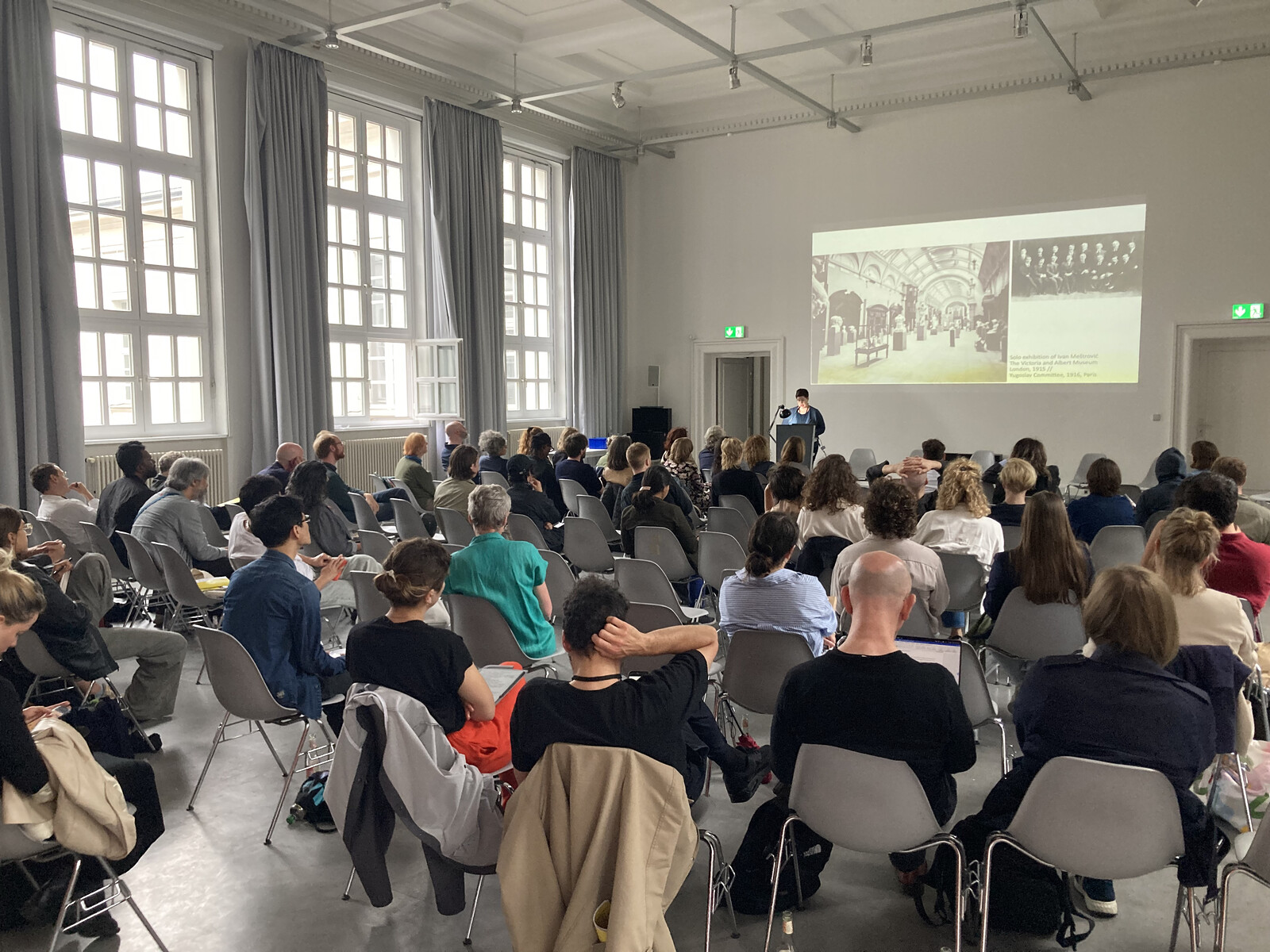
The persistent need to perform and the high level of competitiveness preoccupies the notions of social-relations and participation. In art the idea of critical participation or the use of other forms of critical practices have been integrated into the very same system they are vividly trying to escape. Participation, for example, has been consistently linked to the consensual model of contemporaneous democracy. Each opposition is a new opportunity for the neoliberal system to propose a novel solution. Democratization can thus nullify the attempt to escape the present reality by re-appropriation into the larger society. Today artists are asked to perform for an audience at infinite panel discussions, symposia, lectures, book launches, and other opportunities to “share” with the globe. You do not have an exhibition without having a lecture. What kind of participation is based upon a forty-minute reading of a statement and ten minutes for questions from the audience? In the end it is always too late. The moderator comes up and says: “Sorry, time is up, we have to leave. Thank you for coming and thanks to the speakers for their time and interesting insight.” Where is this “sharing of knowledge?” Is it meant to be a multitudinous and unilateral process? Why should I enable the production and reproduction of such models? Here the problem we are facing is of methodological nature.
Felix Gonzalez-Torres, Untitled (Perfect Lovers), 1991. Two identical, adjacent, battery-operated clocks were initially set to the same time, but, with time will inevitably fall out of sync.
![]()
Maintaining the performative sway of participation, we constrain collaboration to a mantra that serves the purpose of the already existing apparatuses. Substantial changes, and an altered concept of participation, can only be brought about by a deliberate fracture. Participation revolving around disinterested participation would revitalize the degree of intensity and investment to transform the performative experience of the collective. Unbiased dialogue can produce shared creative time and a space of social interaction. It facilitates a prismatic social environment of surplus relations, encouraging a break from the calculated logic of current artistic production.
Art participation should be considered not as a political choice or strategy, but more as a methodology that aims to preserve the autonomy of the artistic and cultural production from the attack of the neoliberal all-encompassing logic. For participatory practices preserve the autonomy of art mean to use the potential of collaborations to create a more sustainable economy for artists and cultural producers. Modes of Participation can create the conditions for an economy that is not totally dependent on the needs and wills of the current market. They can generate practical interventions that preserve and sustain the autonomy of cultural productions and by doing so, creating the conditions for art to envision different possibilities of existence.
But in order to establish a different meaning for participation, we should perhaps reconsider current cultural attitudes and social behaviors. Time, for example, needs to be re-introduced into current artistic, critical and curatorial production. Not as an oscillation of time, but as a “spatialization of the subject”. Against the backdrop of contemporary virtual and physical progress, one could oppose the necessity of durational experience and the sense of prolonged time that resists rapid consumption. Experience is comprised of time spent as well as a space of experience and shared intensities. Time is an essential element in participatory practices. Diverse knowledge and exchanges, and fruitful long-term relations require not just physical time but steadfast consistency. Endured duration is particularly vital in the context of virtual-communications. The reason is quite simple: people don’t share the same level of understanding or sensitivity, and a model of learning, exchanging and developing relationships varies extensively. Speed of pace is different for everyone. We cannot wish for the contrary without surrendering to the trap of authoritarian vision.
Adopting a creative model based on collaboration does not only mean maximizing outcomes or saving economic resources. People should revel in the space and allow for participation, discussion, and confrontating beliefs and modes of thinking. Only then can operative possibilities for transforming the acquired knowledge into operative models of actions unfold. A space of conflict where dissimilarities can play out and subsequently be used rather than liquidated at the first mention of a discrepancy is essential.
We should not forget that collaborations have become a necessity for the growth and implementation of profits in the capital industry. Today managerial agendas abide by more complex yet malleable democratic models. Groups can be identified through their representative members, for example, which spurs homogenization and the dissolution of the individuals ultimately relied upon for the decision. Participation, under the guise of performance, is constantly compromised. It accepts the conditions for the benefit of others, further perpetuating the current illusory, consensual democratic trend. Any partnership in this context becomes a tool for pursuing individual interests at the expense of potentially collective achievements.
Participation should be regarded as an opportunity to escape quantitative time and the correlation between its passing and imminent “results” and successes. Participation can create a genuine place for growth and education by first of all embracing a different sense of time. Genuine in the sense that a collaborative project channels energies, feelings and emotions into an event of intensities. It is an experience of proximity and materialized distance. Participation is like the paradox of Zeno’s tortoise in Plato: the tortoise’s movements are slow and often imperceptible, but they are firm and have a precise direction. Although Achilles is faster, he reaches where the tortoise has been and still has farther to go.
The potential of participatory practices indeed lies within the distribution of time and of duties. Pressure, competitiveness, and the anxiety over the ‘right’ performance must dissolve. Subjectivities, both individual and collective, should be fostered while those involved remain responsible for honesty to themselves and the Other. Participation is more than a funny way of doing and making things; it is a painful process of human and professional investment. It is an exercise in adjustments, in detachment from a system that obliges us to become a mechanism in a broken machine.
New labor conditions have entangled the current society, leaving millions of young people unemployed, self-employed or simply precarious. The trap is thus set for those who cannot envision their future, be it unrealized projects or the fulfillment of ambitions. A job is not only a way to earn money but a means of independence. The current situation is frustrating because we are unable to overcome the limits of the implemented system to envision different ones. In this sense participatory practice functions as a mode of resisting social annihilation by exceeding the limitations of the space and overcoming the logic of economic value.
Participation can resist the acceleration and optimization of performance. It can resist both consensual models and homogenization. Its polyphonic conflicts and manifold nature are reasons for both inclusion in and optimistic exclusion from the neoliberal system. It could be a motif for changing the way we understand what is possible.
Modes of Participation in this context have the capacity to explore new forms and new meanings. Rather than romanticize a concept of community or the bodily personification of the abstract concept of ‘multitude,’ participation is best served as an operative to produce an innovative, breathing place and an emancipated space of production.